Balancing Influence, Growth, and Innovation
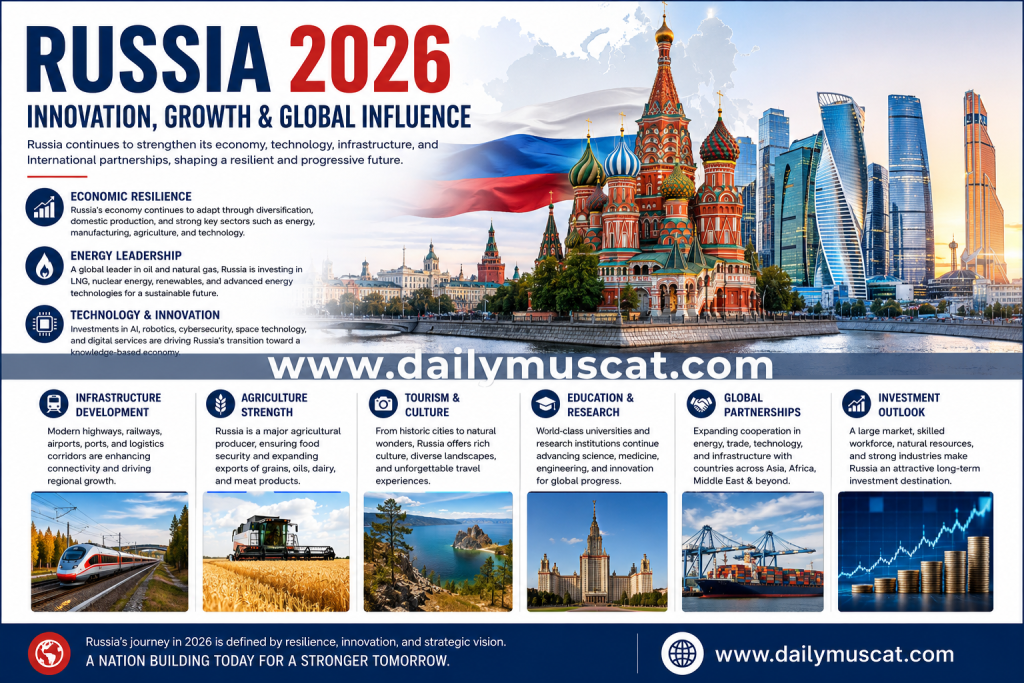
Russia remains one of the world’s most influential nations, stretching across Europe and Asia with vast natural resources, advanced industries, and a rich cultural heritage. Despite facing significant international challenges in recent years, the country continues to pursue economic development, technological advancement, and strategic partnerships that shape both regional and global markets.
As the world’s largest country by land area, Russia possesses enormous reserves of oil, natural gas, minerals, timber, and agricultural land, making it a critical player in global energy and commodity markets. In 2026, the nation is placing increased emphasis on strengthening domestic industries, expanding infrastructure, and investing in innovation to secure long-term economic stability.
Russia’s Economy Continues to Adapt
Russia’s economy has demonstrated resilience through diversification efforts and increased investment in domestic manufacturing. Key sectors such as energy, mining, agriculture, transportation, defence manufacturing, and information technology continue to contribute significantly to national economic performance.
The government has also encouraged local production, import substitution, and technological independence across multiple industries. These initiatives aim to strengthen supply chains while supporting local businesses and creating employment opportunities.
Small and medium-sized enterprises (SMEs) are gradually becoming more important contributors to economic growth, particularly in digital services, manufacturing, food production, and logistics.
Energy Remains Russia’s Global Strength
Russia continues to be among the world’s leading producers of natural gas, crude oil, and petroleum products. Its energy exports remain an essential source of national revenue and continue to influence global energy markets.
Alongside traditional energy production, Russia is investing in:
- Natural gas infrastructure
- Liquefied Natural Gas (LNG) projects
- Nuclear energy technology
- Renewable energy initiatives
- Hydrogen research
- Energy efficiency programmes
These investments reflect broader efforts to modernise the country’s energy sector while responding to changing global energy demands.
Technology and Innovation Drive Future Growth
Russia continues expanding its technology sector through investments in:
- Artificial Intelligence (AI)
- Cybersecurity
- Robotics
- Space technology
- Advanced manufacturing
- Digital banking
- Software development
Technology parks, innovation centres, and research institutions are supporting entrepreneurs and engineers developing new products for domestic and international markets.
Russian universities also continue producing highly skilled graduates in engineering, mathematics, physics, and computer science, strengthening the country’s technical workforce.
Infrastructure Development Across the Country
Large-scale infrastructure projects remain a priority for Russia’s long-term development strategy.
Current investments include:
- Modern highways
- Railway expansion
- Airport upgrades
- Smart city development
- Urban transport systems
- Port modernisation
- Logistics corridors connecting Europe and Asia
Improved transportation networks help facilitate trade, tourism, and industrial growth while enhancing regional connectivity across the country’s vast territory.
Agriculture Strengthens Food Security
Russia has become one of the world’s leading agricultural producers and exporters.
Its farming sector continues expanding through modern agricultural technologies, improved irrigation systems, and precision farming techniques.
Major agricultural products include:
- Wheat
- Barley
- Corn
- Sunflower oil
- Potatoes
- Sugar beet
- Poultry
- Dairy products
The country’s fertile agricultural regions play an important role in supporting both domestic food security and international exports.
Tourism Offers Diverse Experiences
Russia offers visitors an extraordinary range of travel experiences.
Popular destinations include:
- Moscow’s historic landmarks
- Saint Petersburg’s museums and architecture
- Lake Baikal
- The Caucasus Mountains
- Kamchatka Peninsula
- The Golden Ring cities
- Siberian wilderness
Tourists are attracted by Russia’s centuries-old history, world-famous art, cultural festivals, scenic landscapes, and architectural masterpieces.
Education and Scientific Research
Russia maintains a strong reputation in scientific research and higher education.
Universities and research institutions continue contributing to advances in:
- Aerospace engineering
- Nuclear science
- Medicine
- Artificial Intelligence
- Mathematics
- Physics
- Environmental research
Collaboration between universities and industry supports innovation across multiple sectors.
Russia’s Expanding International Partnerships
Russia continues developing economic and diplomatic relationships with countries across Asia, the Middle East, Africa, and Latin America.
Trade cooperation includes sectors such as:
- Energy
- Agriculture
- Mining
- Infrastructure
- Manufacturing
- Technology
- Education
Expanding international partnerships remain an important component of Russia’s long-term economic strategy.
Investment Outlook
Russia’s large domestic market, abundant natural resources, skilled workforce, and industrial capabilities continue to attract interest from businesses operating in sectors such as energy, mining, manufacturing, agriculture, logistics, and technology.
Investors often monitor government policies, infrastructure projects, regional development programmes, and international market conditions when evaluating opportunities.