
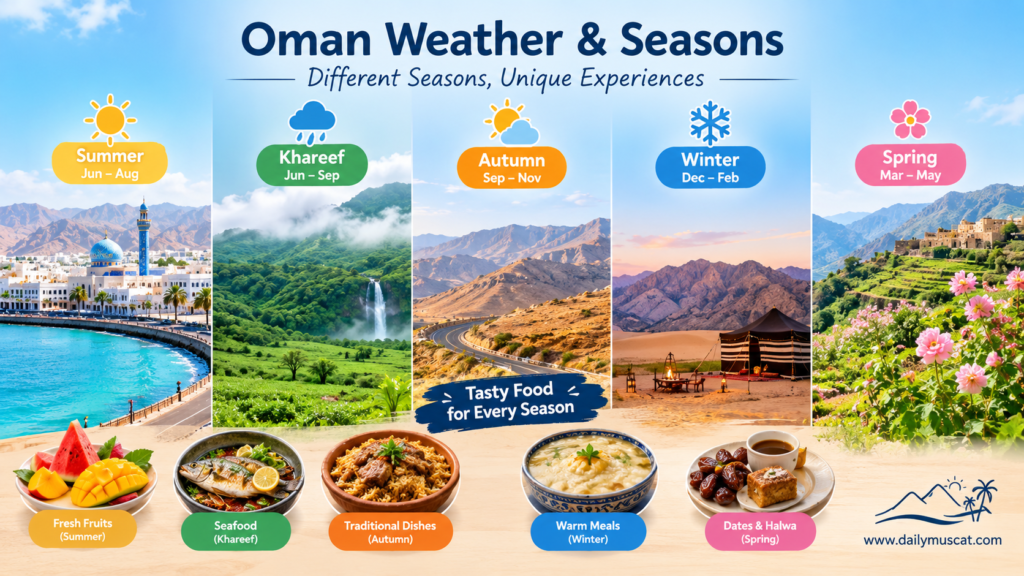
Different Weather Seasons in Oman: A Complete Guide
DailyMuscat.com | Travel • Climate • Lifestyle
Oman is a country of remarkable natural contrasts. From the golden dunes of the desert and the sunny beaches of Muscat to the cool mountain air of Jabal Akhdar and the misty green landscapes of Salalah, the weather changes considerably from one region to another.
Understanding Oman’s weather and seasons helps residents, tourists, and travellers choose the right time for holidays, outdoor activities, traditional food experiences, and road trips.
Oman generally experiences four seasonal periods—spring, summer, autumn, and winter—while southern Oman has a distinctive monsoon season known as Khareef, which transforms Dhofar into a cool, green landscape.
1. Summer in Oman — Hot and Sunny

Jun–Aug
Typical season
Oman’s summer is generally hot, sunny, and dry in many northern and interior areas. Temperatures can become especially high in desert regions, so outdoor activities are often more comfortable early in the morning or after sunset.
Mountain destinations and southern Dhofar offer a different experience, with cooler conditions in suitable locations.
What to eat in summer
- Fresh fruit, including watermelon and mango.
- Grilled fish with lemon and light spices.
- Salads, yoghurt-based dishes, and refreshing drinks.
- Dates as a traditional snack.
Travel tip: Carry water, use sun protection, and avoid strenuous activity during the hottest hours.
2. Khareef in Salalah — Oman’s Green Season

Jun–Sep
Usually
Khareef is one of Oman’s most distinctive seasonal attractions. During the southwest monsoon, parts of Dhofar experience mist, drizzle, cloud cover, and cooler temperatures. Hillsides turn green, springs become more prominent, and Salalah attracts visitors looking for a break from the heat elsewhere in the region.
The season typically runs from late June to September, although its timing and intensity vary from year to year.
What to eat during Khareef
- Omani shuwa, traditionally slow-cooked marinated meat.
- Mashuai, a traditional Omani fish dish.
- Hot karak tea and Arabic coffee.
- Fresh coconut drinks and seasonal fruit.
- Local dishes featuring seafood from Dhofar’s coast.
Travel tip: Pack a light jacket, expect mist on mountain roads, and check road and sea conditions before travelling.
3. Autumn in Oman — Comfortable Outdoor Weather

Sep–Nov
Typical season
Autumn generally brings gradually decreasing temperatures across much of Oman. It is a good period for exploring historic forts, visiting coastal towns, enjoying outdoor cafés, and taking scenic drives.
In Dhofar, the period after Khareef is often called the Sarb season. The mist gradually clears, while some landscapes remain green for a time.
What to eat in autumn
- Grilled kingfish and other local seafood.
- Rice dishes with meat or chicken.
- Fresh dates and seasonal fruit.
- Omani halwa served with Arabic coffee.
Travel tip: Autumn is a useful season for combining city sightseeing, mountain excursions, and coastal visits.
4. Winter in Oman — Ideal for Outdoor Adventures

Dec–Feb
Typical season
Winter is generally one of the most pleasant times to explore Oman. Muscat and many coastal destinations enjoy mild daytime conditions, while desert nights and mountain areas can be considerably colder.
It is a popular period for camping, hiking, sightseeing, beach trips, and exploring the country’s historic towns.
What to eat in winter
- Shuwa with rice for a traditional meal.
- Harees, a comforting dish made with wheat and meat.
- Hot lentil soup and other warm soups.
- Halwa with kahwa, or Omani coffee.
- Freshly grilled meat and fish.
Travel tip: Bring warm clothing for mountain trips and overnight desert camping, even when daytime temperatures are comfortable.
5. Spring in Oman — Flowers, Farms and Fresh Air
Mar–May
Typical season
Spring brings warming temperatures, changing landscapes, and seasonal agricultural activities. In Jabal Akhdar, the famous rose-growing season usually takes place during spring, when mountain terraces become especially attractive to visitors.
What to eat in spring
- Fresh seasonal fruit and locally grown produce.
- Omani rice dishes with chicken or meat.
- Grilled vegetables and fresh salads.
- Traditional Omani sweets and rose-flavoured refreshments.
Travel tip: Visit the mountains for scenic walks and rose-related experiences, but prepare for warmer conditions at lower elevations.
How Weather Changes Across Oman


Oman does not experience identical weather everywhere. Its mountains, coastline, deserts, and southern monsoon region create different local conditions.
| Region | Typical weather character | Best experience |
|---|---|---|
| Muscat | Hot summers, milder winters | Beaches, city tours, restaurants |
| Salalah and Dhofar | Summer Khareef; warmer, drier periods at other times | Green landscapes, waterfalls, local seafood |
| Jabal Akhdar | Cooler mountain conditions | Rose season, orchards, hiking |
| Jabal Shams | Cooler than nearby lowlands, especially at night | Canyon views and mountain walks |
| Wahiba Sands | Dry desert conditions, hot days and cooler nights | Camping and desert adventures |
| Musandam | Coastal climate with seasonal variation | Boat trips, fjords, marine experiences |
These are general patterns rather than a daily forecast. Conditions can vary with altitude, location, and year.
Traditional Omani Food for Different Weather


Food is an important part of experiencing Oman. While people can enjoy these dishes throughout the year, certain meals and drinks may feel particularly appealing in different conditions.

Hot weather: fresh fruit and light meals
Watermelon, mango, salads, yoghurt dishes, and grilled fish are refreshing options. Drink enough water and limit excessive sugary drinks in extreme heat.
Cool evenings: shuwa and rice
Shuwa is a traditional Omani speciality made by slowly cooking marinated meat. It is associated with celebrations and gatherings, making it a memorable dish in any season.

Rainy or cool days: harees and soup
Harees combines wheat and meat into a soft, hearty dish. Soups and other warm meals are also appealing during cooler weather.

Any season: kahwa, dates and halwa
Omani coffee, dates, and halwa are enduring parts of local hospitality. They can be enjoyed after meals or when welcoming family and guests.
When Is the Best Time to Visit Oman?
For many travellers, October to March is a comfortable period for exploring much of Oman, particularly for outdoor sightseeing. Spring can also be rewarding for mountain flowers, while summer offers the unique Khareef experience in Dhofar.
- For beaches and city sightseeing: Consider the cooler months.
- For green mountains and mist: Plan for Khareef in Salalah.
- For rose gardens: Visit Jabal Akhdar during the spring flowering season.
- For desert camping: Choose cooler months and prepare for cold nights.
- For traditional food: Explore local markets and restaurants throughout the year.
Always check local forecasts before mountain journeys, camping, or coastal activities, especially during heavy rain, strong winds, or periods of poor visibility.
Final Verdict
Oman’s weather is part of what makes the country so distinctive. Hot desert summers, comfortable winter days, colourful spring landscapes, and the extraordinary Khareef season each offer a different way to experience the Sultanate.
Pair these seasonal experiences with traditional Omani food—from shuwa and harees to fresh seafood, dates, and kahwa—and every trip can become a deeper introduction to the country’s culture and hospitality.
For residents and visitors alike, understanding the weather makes it easier to choose the right destination, enjoy outdoor activities, and appreciate Oman’s regional diversity.