
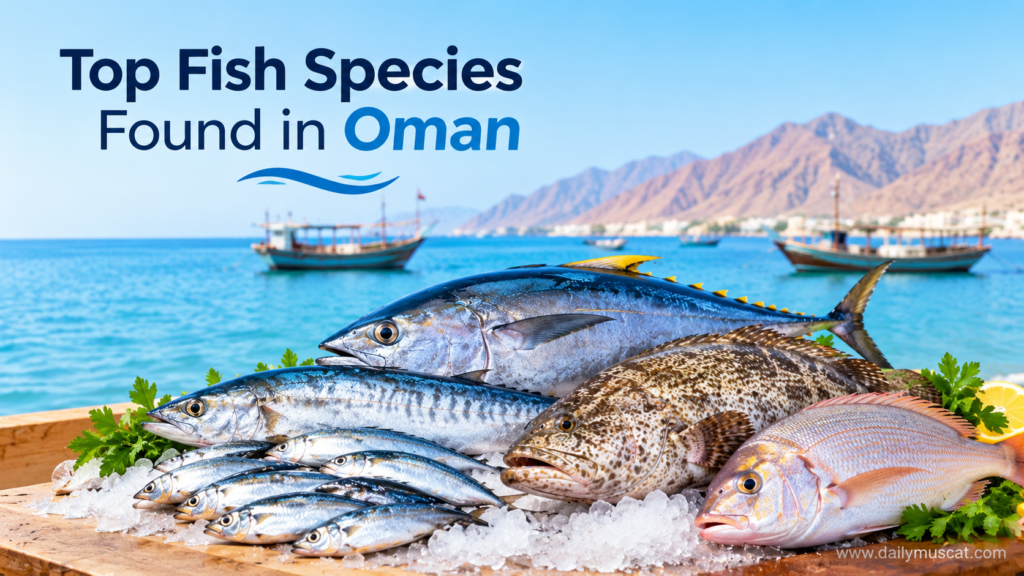
Top Fish Species Found in Oman
Oman is blessed with a rich marine environment, stretching along the Arabian Sea and the Gulf of Oman. Its waters support an impressive variety of marine life, making fishing an important part of the country’s culture, food traditions, coastal livelihoods, and economy. More than 1,200 fish species have been recorded in Omani waters, according to Oman’s marine genetic resources information portal.
From the popular kingfish and hammour to tuna, sardines, and emperor fish, Oman offers a wide range of seafood choices for residents, visitors, restaurants, and seafood businesses.
Discover Oman’s Marine Life

1. Kingfish — A Local Favourite

Kingfish, commonly known as kanad in Oman, is one of the best-known fish in the country’s seafood markets. Its firm flesh and distinctive flavour make it popular for grilling, frying, baking, and traditional home-cooked meals.
- Best for: Grilling, frying, and spiced fish dishes.
- What makes it special: Firm texture and rich flavour.
- Where it fits: Home kitchens, restaurants, and seafood markets.
Kingfish is also commercially important in Oman’s coastal fisheries.
2. Hammour — A Popular Grouper
Hammour is a familiar name for several grouper species sold in Oman. Known for its mild flavour and substantial white flesh, it is a popular option for people who enjoy a satisfying seafood meal.
Hammour works well in baked fish recipes, grilled dishes, and aromatic curries. Because grouper species can differ in size and conservation status, buyers should choose legally sourced fish and follow local fishing regulations.
- Best for: Grilling, baking, and curries.
- Taste: Mild and delicate.
- Popular with: Families and seafood restaurants.
National Fisheries, an Omani seafood company, also identifies grouper as an important seafood product.
Oman’s Premium Seafood Producer
3. Yellowfin Tuna — A Valuable Ocean Fish

Yellowfin tuna is an important species in Oman’s commercial fisheries, particularly in the waters of the Arabian Sea. It is recognised by its streamlined body and distinctive yellow fins.
Its firm flesh makes it suitable for steaks, grilling, and other seafood preparations. Tuna is also widely used in canned products and international seafood trade.
- Best for: Tuna steaks, grilling, and curries.
- Taste: Rich and meaty.
- Economic importance: Supports commercial fishing and seafood markets.
4. Sardines — Small Fish, Big Importance

Sardines are small, silvery fish that play an important role in Oman’s seafood supply. They are often sold fresh, dried, or preserved, depending on local preferences and market demand.
Despite their small size, sardines are a useful source of protein and omega-3 fatty acids. They are commonly grilled, fried, or cooked with spices and served with rice or flatbread.
- Best for: Frying, grilling, and traditional meals.
- Taste: Rich and distinctive.
- Key benefit: An accessible seafood choice with valuable nutrients.
Sardines have historically contributed significantly to catches in Oman’s traditional fisheries.
5. Emperor Fish — A Seafood Favourite

Emperor fish are found in tropical waters and are well known among seafood lovers in Oman. Their attractive scales and firm white flesh make them a popular option for a variety of dishes.
Emperor fish can be grilled whole, baked with lemon and herbs, or cooked with traditional Omani spices. They are also suitable for family meals because their flavour works well with simple seasonings.
- Best for: Whole-fish grilling and baking.
- Taste: Mild and delicate.
- Cooking tip: Score the skin before grilling to help the heat cook the fish evenly.
The spangled emperor is among the species recognised in Oman’s fisheries regulations.
6. Indian Mackerel — A Versatile Choice

Indian mackerel is another fish found in the wider marine region around Oman. Its silver body, dark wavy markings, and oily flesh make it easy to recognise.
It is a practical choice for everyday cooking and can be prepared with chilli, turmeric, garlic, and other spices. Mackerel is also valued for its omega-3 fatty acids.
- Best for: Pan-frying, grilling, and spicy curries.
- Taste: Rich and savoury.
- Why try it: A versatile alternative to larger premium fish.
7. Queenfish — A Striking Coastal Species

Queenfish are streamlined predatory fish with silvery bodies and distinctive markings. They are part of the wider variety of coastal fish associated with the Indian and western Pacific oceans.
Queenfish can be prepared by grilling, frying, or baking, depending on their size and freshness. Their appearance also makes them interesting for anyone learning to identify the different fish sold in coastal markets.
- Best for: Grilling and frying.
- Appearance: Elongated silver body with dark markings.
- For seafood buyers: Ask the seller to identify the species clearly.
8. Oman Anemonefish — A Colourful Marine Wonder

Not every fish in Oman is caught for food. The country’s waters are also home to colourful reef fish, including the Oman anemonefish, a distinctive species associated with sea anemones.
This fish is an example of Oman’s underwater biodiversity and the ecological value of its coastal habitats. Reef fish help make marine environments fascinating for divers, underwater photographers, and nature enthusiasts.
- Best known for: Its striking appearance and reef habitat.
- Where to appreciate it: Through responsible diving and underwater observation.
- Conservation message: Avoid disturbing marine life or removing fish from their natural habitat.
Oman’s marine resources portal highlights the Oman anemonefish as one of the notable species found in the country’s waters.
Quick Comparison: Popular Fish in Oman
| Fish | Taste and texture | Popular cooking method |
|---|---|---|
| Kingfish | Firm, rich | Grilling |
| Hammour (grouper) | Mild, tender | Baking or curry |
| Yellowfin tuna | Meaty, firm | Steaks or grilling |
| Sardines | Rich, oily | Frying |
| Emperor fish | Mild, firm | Whole-fish grilling |
| Indian mackerel | Rich, oily | Frying or curry |
| Queenfish | Mild to savoury | Grilling or frying |
| Oman anemonefish | Reef species, not a typical food fish | Observe underwater |
Taste and texture can vary by species, size, freshness, and preparation. The table gives general culinary descriptions rather than a ranking.
Why Are Oman’s Fish Resources Important?


Oman’s fisheries matter for several reasons:
- Food security: Locally caught fish provide an important source of protein.
- Employment: Fishing supports coastal communities, traders, transport operators, and seafood businesses.
- Trade: Commercial species such as tuna and kingfish contribute to seafood markets.
- Tourism: Marine biodiversity creates opportunities for responsible diving, snorkelling, and coastal experiences.
- Environmental protection: Healthy fish populations support marine ecosystems and future livelihoods.
Protecting these resources requires responsible fishing, respect for seasonal restrictions, and compliance with rules on permitted species and minimum catch sizes. Oman’s fisheries regulations specify requirements for particular species, so fishers and buyers should check the current rules before catching or trading regulated marine life.
Tips for Buying Fresh Fish in Oman

When buying seafood from a market or fish shop, keep these simple tips in mind:
- Check the eyes: Fresh whole fish generally have clear, not sunken, eyes.
- Look at the gills: They should look fresh rather than dull or discoloured.
- Smell the fish: A fresh, mild sea smell is preferable to a strong sour or ammonia-like odour.
- Check storage: Fish should be properly chilled and kept clean.
- Ask about the species: Local names can differ, so confirm the exact fish when it matters.
- Keep it cold: Refrigerate promptly and cook or freeze it safely.
Final Verdict
Oman offers much more than one or two popular seafood choices. From kingfish and hammour to tuna, sardines, emperor fish, and mackerel, the country’s marine resources provide a remarkable variety of flavours and cooking possibilities.
For seafood lovers, exploring Omani fish is a way to discover local food traditions. For visitors, it is an opportunity to experience the country’s coastal culture. And for future generations, protecting marine biodiversity is essential to keeping this natural wealth alive.
Oman’s seas are a treasure worth enjoying responsibly.