

Oman Warns Illegal Wildlife Filmmakers
As thousands of visitors flock to Dhofar during the famous Khareef season, Oman’s Environment Authority has issued a strong warning against chasing or filming wild animals without official permission, saying such actions threaten the country’s unique wildlife and natural ecosystems.
The authority revealed that it has recently identified several incidents involving content creators and visitors pursuing wild animals in their natural habitats to capture photos and videos. Officials stressed that these activities are not only irresponsible but also violate Omani wildlife protection laws.
Wildlife Under Pressure
According to the Environment Authority, chasing animals can cause severe stress, interrupt natural behaviour, and force wildlife to flee from their habitats. Such disturbances also increase the risk of injuries to both animals and people while disrupting the delicate ecological balance of protected areas.
Officials emphasized that wildlife should be observed from a safe distance and without interference, allowing animals to behave naturally in their environment.
Dhofar: A Treasure of Arabian Biodiversity
Known for its spectacular Khareef (monsoon) season, Dhofar transforms into a landscape of mist-covered mountains, waterfalls, and lush green valleys, making it one of the Arabian Peninsula’s richest biodiversity hotspots.
The region is home to a remarkable variety of wildlife, including the critically endangered Arabian leopard, Arabian gazelles, Nubian ibex, and hundreds of bird, reptile, and plant species that thrive in its unique ecosystem.
With the annual tourism season attracting nature lovers, photographers, and social media influencers from around the world, authorities are urging visitors to enjoy the region responsibly.
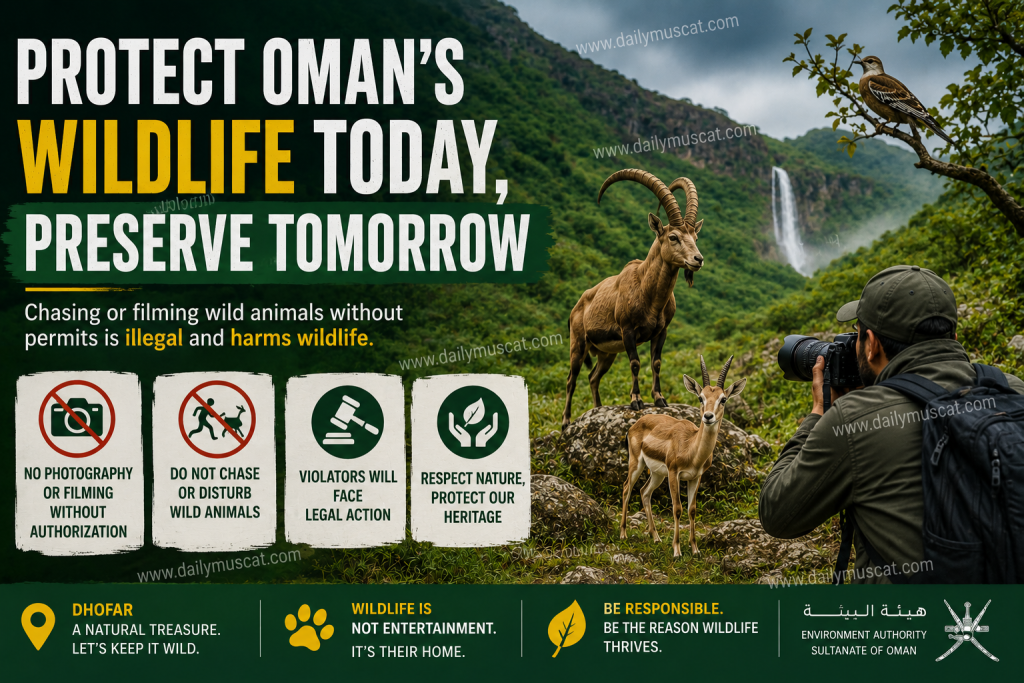
Filming Wildlife Without Permission Is Illegal
The Environment Authority reminded the public that photographing, filming, or pursuing wild animals without prior authorization is prohibited under Oman’s Natural Reserves and Wildlife Conservation Law and its implementing regulations.
Officials said they will continue working with relevant government agencies to monitor online content and identify activities that violate environmental regulations. Anyone found breaching the law could face legal action.
Protecting Nature for Future Generations
The latest advisory highlights Oman’s commitment to conserving its rich natural heritage while promoting responsible tourism. Authorities are encouraging visitors and content creators to respect wildlife, follow conservation guidelines, and help preserve Dhofar’s extraordinary environment for future generations.
As the Khareef season continues to draw large crowds, officials hope greater public awareness will ensure that unforgettable wildlife encounters remain safe, ethical, and environmentally responsible.