Oman Economy 2026-Beyond Oil
Oman Economy 2026 is entering a new era of diversification, investment, innovation and sustainable growth under Oman Vision 2040.
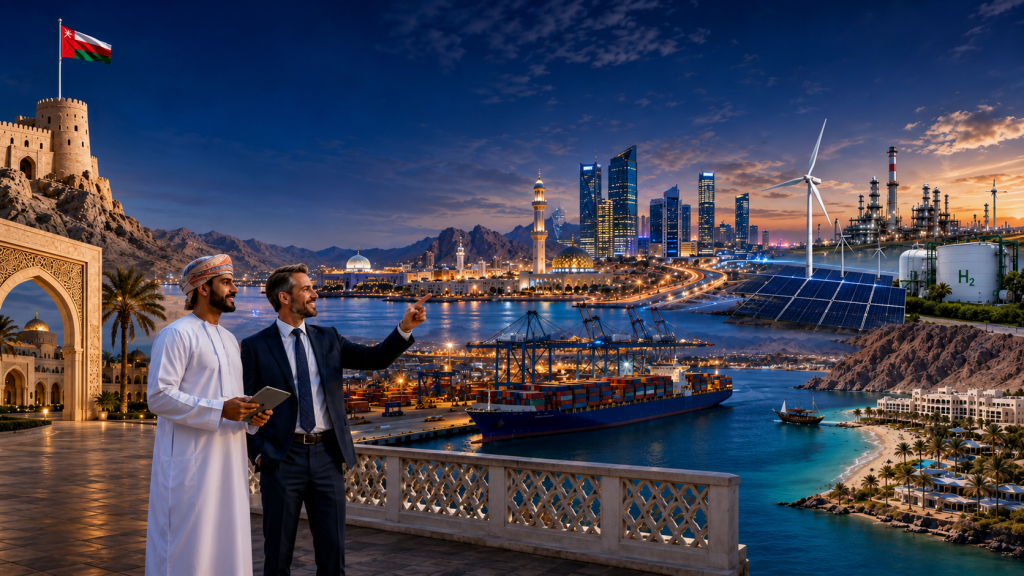
Oman Economic Transformation 2026 represents a new era of innovation, investment, sustainability and economic diversification for the Sultanate. For decades, Oman’s economy remained strongly connected to oil and gas revenues. Today, the country is building a broader and more resilient economic foundation by expanding tourism, logistics, manufacturing, renewable energy, digital technology and international investment.
Under the leadership of His Majesty Sultan Haitham bin Tariq, Oman is advancing the objectives of Oman Vision 2040. This long-term national strategy aims to reduce dependence on traditional energy revenues, strengthen the private sector, create employment opportunities and develop a modern, competitive and knowledge-based economy.
Oman Vision 2040 places strong emphasis on investment, tourism, manufacturing, renewable energy, digital transformation, logistics, education and innovation. By developing these sectors, the Sultanate aims to improve economic resilience and establish itself as one of the Gulf region’s most promising emerging markets.
One of Oman’s greatest strengths is its political and economic stability. The country offers investors a secure environment, modern infrastructure, supportive government policies and strategic access to international markets. Located between Asia, Africa and Europe, Oman serves as a natural gateway for regional and global trade.
Its modern ports, airports, industrial cities, free zones and expanding transport networks allow businesses to reach important international markets. Investors increasingly view Oman as a destination where long-term growth, reliability and opportunity come together.
Although economic diversification is a national priority, the oil and gas sector continues to play an important role in Oman’s development. The energy industry supports government revenues, industrial activity, employment and international partnerships. Oman’s oil, natural gas and liquefied natural gas industries also strengthen its position as a reliable global energy supplier.
At the same time, the Sultanate is using its experience in the energy sector to develop future-focused industries, particularly renewable energy and green hydrogen. This balanced approach allows Oman to benefit from its existing natural resources while preparing for changes in global energy demand.
Renewable energy has become a major part of Oman Economic Transformation 2026. The country has abundant sunlight, vast areas of available land and direct access to major global shipping routes. These advantages give Oman considerable potential in solar energy and green hydrogen production.
Green hydrogen is expected to become one of Oman’s most important future industries. Large-scale clean-energy projects could attract international investors, create skilled employment, support technology transfer and generate new export revenues.
The growth of renewable energy also reflects Oman’s commitment to balancing economic development with environmental responsibility. By investing in clean-energy projects, the country can reduce its dependence on traditional fuels while building new industries for future generations.
Tourism is another important driver of Oman’s economic transformation. The country offers a unique combination of natural beauty, cultural heritage, historic forts, mountains, deserts, beaches and traditional hospitality.
The Khareef season in Dhofar, the mountains of Al Hajar, the deserts of Sharqiyah and Oman’s long coastline provide visitors with experiences that are different from many other destinations in the Gulf.
Tourism development is creating opportunities for hotels, restaurants, airlines, travel companies, local businesses, cultural attractions and adventure-tourism operators. By promoting responsible and sustainable tourism, Oman aims to protect its natural and cultural heritage while generating investment and employment.
Oman’s strategic location also gives it a major advantage in global trade and logistics. The ports of Duqm, Salalah and Sohar are strengthening the Sultanate’s role as a regional logistics and industrial centre.
These ports connect Oman with major shipping routes and support international trade, warehousing, distribution, manufacturing and regional supply chains. The expansion of the logistics sector is helping Oman create new sources of revenue and reduce its dependence on oil exports.
Manufacturing is another key element of the country’s diversification strategy. Oman is encouraging local and international companies to establish operations in special economic zones and industrial cities.
Growth opportunities are emerging in food processing, mining, petrochemicals, construction materials, renewable-energy equipment, technology-based industries and export-oriented manufacturing.
Special economic zones offer companies access to modern infrastructure, transport networks and attractive investment incentives. These developments can increase exports, strengthen local supply chains and create employment opportunities for Omani citizens.
Digital transformation is also becoming increasingly important to Oman’s economic future. The Sultanate is investing in digital government services, financial technology, entrepreneurship, automation and innovation-driven businesses.
Technology can improve business efficiency, government services, financial systems, tax administration, investment procedures and access to information. It can also support start-ups and make it easier for local and international companies to establish and operate businesses in Oman.
A strong digital ecosystem will help Oman develop a smarter economy and prepare its workforce for the requirements of modern industries. Investment in education and professional training will therefore be essential to the success of Oman Economic Transformation 2026.
Oman Vision 2040 places significant importance on human-capital development. Training in renewable energy, tourism, logistics, finance, manufacturing and technology can prepare Omani citizens for emerging employment opportunities.
The growth of the private sector will also help create sustainable careers and reduce dependence on public-sector employment. By connecting education and training with the needs of modern industries, Oman can improve productivity and strengthen its long-term competitiveness.
International investors are increasingly attracted to Oman because of its strategic location, economic stability, modern infrastructure and supportive government policies. The country offers investment opportunities in renewable energy, green hydrogen, tourism, logistics, mining, manufacturing, agriculture, food security, technology, financial services, real estate and infrastructure.
For companies seeking long-term growth in the Middle East, Oman provides access to regional and international markets along with a stable and business-friendly environment.
However, Oman’s economic transformation also faces challenges. These include fluctuations in global energy prices, competition for foreign investment, the need to create skilled employment and the importance of maintaining fiscal stability.
Successful diversification will require consistent implementation of reforms, greater private-sector participation, continued investment in education and stronger support for small and medium-sized enterprises.
Transparent regulations, efficient government services and responsible management of natural resources will also be necessary to achieve the long-term objectives of Oman Vision 2040.
The Sultanate is no longer viewed only as an oil-producing country. It is developing into a diversified economy supported by innovation, tourism, logistics, manufacturing, technology and sustainable energy.
Oman’s natural resources, geographical position, political stability and long-term national vision provide a strong foundation for continued economic progress.
Oman Economic Transformation 2026 is a story of vision, determination and opportunity. By combining its traditional energy strengths with renewable energy, tourism, industrial development, logistics and digital innovation, the Sultanate is building an economy prepared for the future.
The success of this transformation will depend on effective implementation, skilled human resources, private-sector participation and strong international partnerships. For investors, businesses and global markets, Oman represents more than a strategic location. It represents a rising economic opportunity at the crossroads of Asia, Africa and Europe.